<img height="1" width="1" style="display:none" src="https://www.facebook.com/tr?id=1647336108819163&amp;ev=PageView&amp;noscript=1">
Skip to content

Drawing Fundamentals for Beginners Taught by Industry Artists

Build your drawing fundamentals, from perspective and form to anatomy and composition, through live mentorship from industry pros.
FIND OUT MORE

Level Up Your Drawing Skills

Have questions or ready to enroll? Fill out the form below and our team will get back to you with all the details you need to secure your spot.
Delivery

Online live classes
Custom video lectures

Duration

12 weeks
10hrs/week

Skill Level

Novice to beginner
No prior experience required

Start date

June 1st, 2026
July 6th, 2026

Overview

Start Your Creative Journey

This beginner-friendly course is your first step toward bringing your artistic ideas to life in both traditional and digital mediums. Learn how to navigate Photoshop, use perspective to create more realistic drawings, and dive into anatomy, exploring how to determine key forms, proportions, and landmarks of the human head and body.

Why study beginner drawing with us:

  • Lessons are crafted by an industry pro
  • No experience required 
  • Learn drawing methods used in the industry
  • Gain access to our online community where you can network, troubleshoot, and grow as an artist with help from our TAs!

This short course, taught in a fun group setting, will build your fundamental drawing skills and provide the foundations needed for a career in art.

beginner-drawing-02
Course Information

What You'll Learn

Build confidence with essential Photoshop skills, learn core drawing techniques, and create stronger, more dynamic artwork. Develop depth and dimension with perspective drawing, and bring your characters to life with a solid understanding of human anatomy, from facial structure to limbs, hands, and feet. Perfect for beginners ready to level up their creative abilities.

  • Learn Photoshop basics to create and refine digital art
  • Explore essential drawing techniques, from basic shapes to dynamic compositions
  • Build strong perspective skills to add structure and dimension to your artwork
  • Study human anatomy, including the head, torso, limbs, hands, and feet, to create lifelike figures
By the end of this course, you’ll be able to combine your anatomy skills into a full figure drawing and design a character costume, giving you the confidence to continue your artistic journey.
beginner-drawing-03

Weekly Breakdown

Week 01:Photoshop Basics
In this lesson, we’ll work through a series of exercises carefully designed by working professionals to improve your core drawing skills and give you important fundamental knowledge for getting the most out of the course.

Learning Outcomes
  • Understand basic drawing techniques
  • Create foundational line and form drawings
  • Implement perspective, contour, and shadow into drawings
  • Understand relationships between objects in an illustration
  • Create drawings of nature, animals, and humans with accurate form and volume
Week 02:Drawing Basics 01
This lesson takes you through a series of practical exercises designed by working professionals to strengthen your core drawing skills. You’ll build essential foundational knowledge that supports everything you learn next, helping you develop better technique, confidence, and control as an artist.

Learning Outcomes
  • Understand basic drawing techniques
  • Create foundational line and form drawings
  • Implement perspective, contour, and shadow into drawings
  • Understand relationships between objects in an illustration
  • Create drawings of nature, animals, and humans with accurate form and volume
Week 03: Drawing Basics 02
Building on linework and 3D forms, this lesson shifts focus to organic shapes with more complex curves and subtle transitions. You’ll learn how to break challenging forms down into simpler components, making them easier to understand and draw. This skill becomes essential as you progress toward more complex subjects, including the human figure.

Learning Outcomes
  • Understand how contour lines inform complex organic forms.
  • Create convincing intersections between objects of different shapes and sizes.
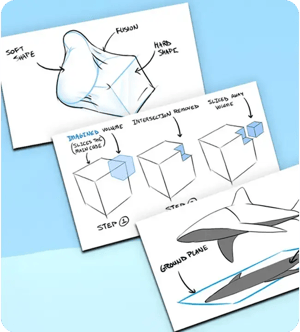
  • Design volumes using an additive and subtractive process.
  • Fuse forms with an organic layer, considering points of tension.
  • Simplify complex organic forms using basic geometric shapes.
Week 04: Drawing Basics 03
This lesson moves from inanimate forms into the world of living creatures. You’ll apply the same form-simplification mindset, learning to construct figures as a series of simple geometric shapes, often referred to as a mannequin. This approach helps you understand structure, balance, and proportion before adding detail, setting a strong foundation for drawing believable characters and anatomy.

Learning Outcomes
  • Learn how to simplify sea creatures into basic shapes
  • Learn how to use a ground plane to create cast shadows and align features
  • Learn how to check for accuracy by using negative space
  • Learn how to envision the reverse view of an animal using basic shapes
  • Learn how to simplify humans using a mannequin made of basic geometric shapes
Week 05: Perspective 01
This lesson introduces perspective as a tool for visualizing objects in real-world space. You’ll work through guided exercises covering one-, two-, three-, and curvilinear perspectives, building a practical understanding of how forms exist and relate within an environment. Perspective can be challenging, but this lesson breaks it down step by step—giving you the time and structure needed to develop confidence with a skill that underpins believable drawing and design.

Learning Outcomes
  • The concepts of Horizon, Vanishing Point(s), Eye Level, Cone of Vision, and Line of Sight.
  • Parallel lines on objects will converge on a vanishing point on the horizon.
  • Perspective layouts such as one-point, two-point, and three-point are simplifications of real-world linear perspective, which is more complex.
  • Three Point Perspective introduces the Zenith and/or Nadir vanishing points.
  • The addition of more than three vanishing points for an object requires curvilinear perspective, where parallels bend as they cross the horizon line.
Week 06: Perspective 02
This lesson deepens your understanding of perspective by exploring multiple perspective systems within a single scene. You’ll learn how to construct rotated objects and use perspective boxes as guides for rounded forms and ellipses in space. These concepts can be demanding, but the lesson breaks them into clear, repeatable steps,  helping you build the spatial accuracy needed for complex scenes and believable forms.

Learning Outcomes
  • Understand how to combine different linear perspective layouts in the same scene.
  • Learn how dramatic scenes compare to human vision with regard to distortion.
  • Learn how to rotate boxes in perspective using comparative analysis.
  • Learn how to build objects with ellipses in perspective using boxes to guide you.
  • Gain a better understanding of perspective from a conceptual standpoint, which will increase your confidence and flexibility.
Week 07: Anatomy: Human Head 01

This lesson introduces a simple, approachable method for drawing the human head by constructing facial features from basic shapes. By thinking of the head as a combination of spheres and cylinders, the process becomes far less intimidating.

Working like a sculptor, you will build the head form piece by piece, allowing you to focus on each area while maintaining correct structure and proportion. The lesson begins with a full front view of the face, then moves on to studying individual features from multiple angles.

Learning Outcomes
  • Understand diversity in facial features for illustration
  • Create foundational face drawings with an understanding of realistic proportions
  • Incorporate the study of human anatomy in detailed facial feature drawings
  • Understand the relationship between facial milestones
  • Recognize how targeted studies can be applied to a larger challenge, such as drawing heads.
Week 08: Anatomy: Human Head 02

Building on front-view head construction and basic facial features, this lesson moves into more advanced aspects of head anatomy. You will explore hair rendering and learn how to draw the head from a range of angles with greater accuracy and confidence.

The proportional guidelines introduced earlier remain essential here, helping you maintain structure and consistency as you progress toward more complex head drawings.

Learning Outcomes
  • Simplifying hair by constructing from larger volumes
  • Identifying the apex of forms to place appropriate specular highlights
  • Avoiding flat strands of hair using the ribbon abstraction
  • Placing features proportionally by wrapping guidelines around the sphere
  • Bringing all techniques together to create head renderings in three-quarter-view
Week 09: Anatomy: Hands and Feet
In this lesson, we will narrow our focus to drawing human hands and feet. These anatomical features are complex, and artists find them challenging to draw. By understanding the mechanical nature of the hands and feet and ways to simplify the forms, you will become more confident drawing these features with nuance and accuracy.

Learning Outcomes
  • Understand the bones of the hand and foot and how they dictate proportions.
  • Learn how to approach hand and foot drawing using a simpler armature initially.
  • Familiarize yourself with the volumes of the hand and foot using a geometric mannequin.
  • Get comfortable using an iterative three-step process for approaching hand and foot drawings.
  • Understand important details of the hand and foot and how to express them in a drawing.
Week 10: Anatomy: Torso
In this lesson, we will examine the human torso, encompassing the neck, trapezius, chest, waist, and pelvis. The torso acts as the central union of all the limbs and, in many ways, dictates the core gesture of the body. Our approach will follow the winning formula of simple to complex, starting with understanding the basic proportions of the torso and then finding ways to simplify the forms. Finally, we’ll add the details of the individual muscles.

Learning Outcomes
  • Understand the proportions of the torso.
  • Identify important landmarks for helping create an accurate block out of the torso.
  • Learn how to simplify the torso using basic geometric volumes.
  • Utilize an iterative approach to manage the complex layering of the torso.
  • Familiarize yourself with the muscles of the torso.
Week 11: Anatomy: Arms and Legs

Arms and legs are explored in detail, beginning with their underlying skeletal structure. The forms are then simplified into mannequin shapes before building up the major muscle groups.

The connection of the limbs to the torso is also covered, with focused attention on the shoulder and pelvic regions to help create figures that feel solid, balanced, and anatomically sound.

Learning Outcomes
  • Understand the proportions of arms and legs.
  • Identify key landmarks to help create an accurate blockout of arms and legs.
  • Learn how to simplify arms and legs using basic geometric volumes.
  • Utilise an iterative approach to manage the complex details of arms and legs.
  • Familiarise yourself with the musculature of arms and legs.
Week 12: Figure Drawing and Costume

All previously learned anatomy concepts come together in a full figure drawing session, focusing on structure, proportion, and clarity. Using the final pose, you will then design a costume through a simple mashup process, learning how to build visual ideas on top of a solid anatomical foundation.

This process demonstrates how foundational drawing skills translate into real-world creative workflows, supporting career paths in fields such as concept art, illustration, comics, and animation.

Learning Outcomes
  • Learn the benefits of a carefully designed figure drawing session
  • Apply anatomical knowledge to naturalistic full-figure drawings
  • Utilize a multi-stage, iterative drawing approach to refine longer pose drawings
  • Use a simplified approach to costume design using minimal inputs
  • Apply design choices considering the narrative and role of your character
Testimonials

Transforming Beginners Into Confident Artists

Maya R.

“This course finally made drawing click for me. I can actually see my progress week by week.”

Daniel K.

“I saw improvement in the first week. The lessons are practical and really easy to follow, even if you’ve never drawn before.”

Aisha M.

“The anatomy section was a game-changer. My characters feel so much more alive now, and I finally understand how limbs and hands work together.”

Lucas B.

“Perfect for beginners. I went from stick figures to full drawings I’m proud to show my friends.”

Haruto S.

“Photoshop used to confuse me completely. This course broke it down so simply, I feel confident creating digital art now.”

Sofia G.

“Perspective always terrified me. After this course, I finally understand depth and can create drawings that feel three-dimensional.”

Priya N.

“I learned more in a month here than I did trying to teach myself for a year. The step-by-step approach really works.”

Marcus J.

“The instructors explain everything clearly. I never feel overwhelmed, and the lessons actually make sense.”

Tomás C.

“If you’re new to drawing, this is the course to start with. It teaches the essentials you need and gives you the confidence to keep going.”

Ready to Join?

Every great artist starts somewhere. Build the skills that support your creative goals.
Instructors

Meet Your Instructors

Tomislav Juric

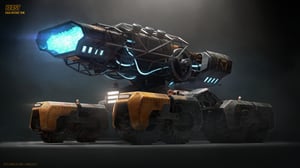
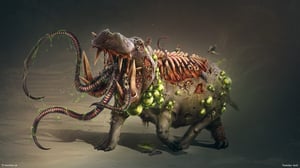
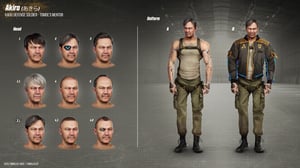
Tomislav is a concept artist and illustrator with 10 years of professional experience, 8.5 of which are in game development. He’s worked on everything from indie games to well-known AAA titles, as well as freelance projects for companies, influencers, and music artists. 

tomislav-juric-headshot
tomislav-juric-1tank-week4-tomislavjuric-lowangle
tomislav-juric-adriaticresidence-artstation
tomislav-juric-tomislavjuric-creaturerender-artstation
tomislav-juric-week12-tomislav-mentor
tomislav-juric-zoo-scene-concept-signed
tomislav-juric-ship-environment-50

Gwen Torenbeek

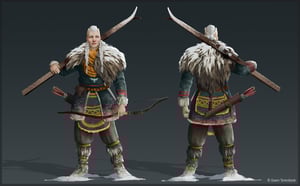
Gwen is a freelance concept artist and illustrator who graduated from CG Spectrum’s Concept Art Specialization course in 2023. She is passionate about teaching and helping people discover their love for art, and strives to support them on their unique artistic journeys.
gwen-torenbeek-headshot
gwen-torenbeek-grimland-environment
gwen-torenbeek-ram10-wk08-gwentorenbeek-environment-updated
gwen-torenbeek-hero-character-page
gwen-torenbeek-cv-bachelor-chase-off-resized
gwen-torenbeek-matte-painting-environment
gwen-torenbeek-background-study-5
FAQ's

Drawing Foundations FAQs

What are the prerequisites for the Beginner Drawing Course?

Age Minimum
T
he general minimum age to be able to enroll in our industry certificate courses is 16. We require parent or guardian consent during the enrollment process for applicants under 18.

Students under 16 will require a further assessment before they can officially enrol. This may include an interview with a course advisor and the creation of a study plan to ensure they have considered how they will manage a college-level workload.

English Proficiency
We expect our students to have a good understanding of written and spoken English. There’s no specific ’level'; however, you must be able to understand video tutorials in English (no subtitles) and speak with your mentor in English during your live Q&A session.

Computer Literacy
To be successful in this program, you will need basic computer skills and a computer that meets the minimum specifications (see next question).

Is this course a prerequisite for your other concept art courses?

A solid foundation in drawing is necessary for courses like Concept Art Essentials, Concept Art Foundations, and the Bachelor of Digital Art (Concept Art). This beginner's course is thoughtfully crafted to equip you with the necessary drawing skills to meet the entry requirements for our more advanced programs.

How does this Beginner course differ from your Essentials and Foundations courses?

This course is designed to provide a structured group learning experience with a focus on building introductory drawing skills for students with no prior experience.

Participants gain access to:

  • Weekly TA-led sessions to guide their progress.
  • Our vibrant online community
  • Two mentor-led sessions (one every six weeks on a rolling basis) designed to help prepare them for our Career Tracks.

Students learn in a group setting. The course emphasizes collaborative learning and resource-driven guidance within a dedicated Slack channel, fostering a supportive environment for skill development. It serves as a stepping stone, equipping students with the confidence and skills to advance into more in-depth studies.

What are the software and hardware requirements?

Software:

You will purchase Photoshop (photography plan only) for the length of your studies.

Hardware:

You will need a computer that meets the minimum system requirements for Photoshop, and a graphics tablet (see digital painting software and equipment).

Please note: As the software we use is regularly updated, please check the specs against the latest available version at the time of enrollment.

What careers can I explore post-graduation?

This short course will teach you the basics of drawing and will help you to qualify for and succeed in our more advanced programs.

If you wish to take your learning further and build industry-level skills, we advise continuing your studies with the full career track.

The concept art career track includes the Concept Art Foundations and either the Concept Art Specialization or Digital Illustrator Specialization. It is designed to better prepare you for a job in the industry and help increase your employment opportunities.

The career track ensures you build strong foundational skills before moving on to more complex techniques and workflows. You will also dedicate time to career development and preparing a polished portfolio while you gain invaluable industry insights.

Some of the junior digital painting jobs you could pursue after completing the full study pathway include:

Discover more about these digital painting jobs, tips, and salary expectations on our careers page:

Take Your Drawing Skills to the Next Level

Build your drawing fundamentals, from perspective and form to anatomy and composition, through live mentorship from industry pros.
FIND OUT MORE

Start Your Creative Journey

Have questions or ready to enroll? Fill out the form below and our team will get back to you with all the details you need to secure your spot.